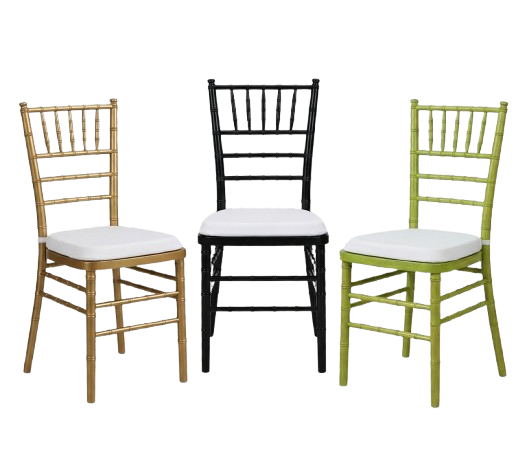
Chiavari chairs don’t need cushions to look good. They were designed two centuries before the modern “comfort over a four-hour wedding breakfast” expectation existed. But almost every Chiavari hire today goes out with a cushion of some kind, and the colour choice matters more than couples expect.
The wrong cushion colour does two things: it fights the chair, and it fights the table. The right colour does the opposite — it ties the chair into the table styling so the whole setup reads as one composition.
Here’s how to choose.
Start with the chair, not the palette
Most couples start with their colour palette and work outwards. With Chiavari cushions, that’s the wrong order. The chair finish has more visual weight than most people realise, and certain cushion colours simply don’t work against certain chair finishes regardless of how well they fit your wider palette.
Work the other way: pick the cushion colour that lets the chair sit comfortably in the room first, then check it works with the rest of your styling. If it doesn’t, the cushion is usually the easier thing to change.
Gold Chiavari chairs
What works:
- Ivory or cream cushions. The default for a reason. The warm off-white tones complement the gold without competing. Works in 90% of formal settings.
- Deep burgundy or wine. Strong contrast that reads as rich and intentional. Particularly good for autumn and winter weddings, and at hotel ballrooms with dark wood detailing.
- Champagne or pale gold. Tone-on-tone. Reads as sophisticated when done well, but the colours must be close enough to either match or clearly contrast — anything in the middle looks like a mistake.
- Navy. Surprisingly versatile with gold. Reads as classic British formal. Works at livery halls, Mayfair hotels, anywhere with an Old Hollywood feel.
- Forest or emerald green. A current favourite for autumn weddings. The deep green grounds the gold and stops it feeling too “bright wedding.”
What doesn’t work:
- Bright white. The cool blue undertone of bright white fights the warm yellow undertone of gold. The chair looks slightly orange against it. Use ivory or cream instead.
- Sage green or dusty sage. The muted, cool quality of sage clashes with gold’s warmth. The chair ends up looking gaudy.
- Dusty pink and blush. Same issue. Cool, soft tones make warm gold look harsh.
- Pale grey. Reads as institutional. Gold chairs deserve more commitment than grey.
White Chiavari chairs
White chairs are the most flexible. Almost any cushion colour works because there’s no warm/cool conflict to manage.
What works particularly well:
- Any pastel. Blush, sage, dusty blue, lavender, peach — all sit comfortably against white. This is why white Chiavari chairs are the default for spring and summer weddings.
- Bold jewel tones. Sapphire, emerald, ruby. White gives them somewhere to land without competing. Good for evening receptions and statement palettes.
- Black or navy. Strong graphic contrast. Works for monochrome modern weddings and corporate award evenings.
- Natural linen or oatmeal. The “no cushion colour” cushion — reads as deliberate when paired with neutral table styling.
What’s worth thinking about:
- Pure white cushion on white chair. Looks fine until photography, where the chair and cushion merge visually and the seating loses definition. A very pale cream or oatmeal reads better in photos.
- Yellow. Hard to get right. The yellow undertones in white Chiavari chairs (most have a slightly warm tint) mean true yellow cushions can look muddy. Test before committing.
Black Chiavari chairs
Black chairs are the most opinionated. They commit the room to a specific mood — usually formal, modern, or both. Cushion choice should reinforce that, not soften it.
What works:
- White or ivory. Crisp, graphic, formal. The default for a reason.
- Deep red or burgundy. Dramatic. Particularly good for corporate award dinners and gala events.
- Gold or champagne. Reads as luxurious. Adds warmth to what would otherwise be a very monochrome setup.
- Navy. Tone-on-tone. Subtle but elegant.
What doesn’t work:
- Pastels. Blush, sage, dusty blue all fight black. The contrast is too sharp and reads as accidental.
- Bright primary colours. Red is fine but veers toward Christmas if you go too bright. Bright blue, bright green — they make the chairs look like they’re at a children’s party.
- Patterned cushions. Black chairs already carry visual weight. Adding pattern to the cushion overloads the seat.
Ghost (clear) Chiavari chairs
Ghost chairs are unique because the cushion is doing most of the visual work — the chair itself recedes. This means the cushion colour effectively becomes the chair colour in photos.
What works:
- Any colour, but commit fully. Pale colours disappear; saturated colours sing. If you want soft and subtle, ghost may not be the right chair.
- Bold pastels work especially well. Strong blush, vibrant sage, electric blue. The transparent chair frame makes saturated cushions look like they’re floating.
- Black or navy. Creates a striking, modern look — the cushion appears suspended in the air.
- Patterned cushions. Ghost chairs are one of the few cases where pattern works well, because the chair frame doesn’t add competing visual elements.
What doesn’t work:
- Pure white cushions. They disappear entirely. The chair looks like it has no seat.
- Anything that matches your table cloth exactly. The cushion blends into the table and the chair frame becomes the visible element instead — opposite of what you want.
Limewash Chiavari chairs
Limewash is the most forgiving finish for cushion colour because the wood grain and warm-but-muted tone work with almost anything natural. The trick is keeping the overall feel consistent — limewash sets a soft, organic mood, and cushion choice should reinforce that.
What works:
- Sage green, eucalyptus, olive. The signature pairing. Sage and limewash is the most-photographed Chiavari setup of the last five years for good reason.
- Dusty pink, blush, terracotta. Natural and warm. Perfect for spring and summer outdoor weddings.
- Cream, oatmeal, natural linen. The “barely there” cushion. Lets the chair finish speak.
- Dusty blue, lavender, mauve. Soft, muted colours that match limewash’s understated quality.
- Mustard yellow, burnt orange. Bold but warm. Particularly good for autumn weddings at country estates.
What doesn’t work:
- Bright white. Looks like a mistake against limewash. The chair finish is too warm and irregular for a clinical white cushion.
- Bright jewel tones. Sapphire, emerald, ruby all compete with limewash’s softness. The chair starts to look rustic-cheap rather than rustic-chic.
- Black. Too harsh. If you want strong contrast against limewash, go for navy or deep aubergine instead.
- Anything glossy or shiny. Limewash’s appeal is the matte, weathered quality. Satin or shiny cushions undercut it.
Practical things people don’t think about
Cushion ties showing
Most hire cushions tie onto the chair with ribbon or fabric ties at the back. If your ceremony or table layout means the back of the chair is visible in photos (which it almost always is), the tie colour matters. Make sure the tie matches or coordinates with the cushion — mismatched ties look amateurish in photos.
Lighting changes the colour
Warm tungsten lighting (most reception venues) shifts everything toward yellow. Cool daylight (ceremonies, garden weddings) keeps colours truer. A dusty pink cushion in afternoon daylight may look almost orange under the evening reception lights.
If your wedding moves through different lighting environments, choose a cushion colour that works under the more challenging lighting condition — usually the warm evening light.
Cushion thickness matters
Thin cushions (1-2 inches) read as a colour accent. Thick cushions (3+ inches) read as upholstered seating and change the chair’s silhouette significantly. For formal weddings with a lot of head-and-shoulders photography of guests seated, thinner cushions usually photograph better.
Photography pulls colours differently
Cushion fabric reflects light in ways that change how the colour reads on camera. Velvet looks deeper and richer in photos. Linen looks lighter and more muted. Cotton reads accurately. If you’re choosing between fabrics for the same colour, velvet generally photographs as a more “wedding” colour than the same shade in cotton.
A simple decision framework
If you’re stuck, work through this in order:
- What’s the chair finish? This determines the warm/cool baseline.
- What’s the dominant colour in your table setting (cloth, runner, plates)? Cushion should either match this tonally or sit one tone darker for contrast.
- What’s your venue’s lighting like at peak event time? Warm tungsten or cool daylight?
- Is the chair back visible in photos? If yes, factor in tie colour.
- Are you committed to one cushion colour, or open to two? Mixing cushion colours (e.g., one colour at the top table, another at guest tables) is a useful styling tool but needs intentional planning.
If you can answer those five questions, the choice usually becomes obvious.
What we provide
We can include cushions in your Chiavari chair quote in a range of colours. Stock changes through the year based on demand — limewash-friendly colours (sage, blush, natural linen) move fastest in spring and summer. Gold-friendly colours (ivory, burgundy, navy) move fastest in autumn and winter.
If you have a specific cushion colour in mind that we don’t stock, we can source from partner suppliers for an additional cost. Often the simpler answer is to choose a colour from our existing range and adjust other elements of your styling — cushions are easier to standardise than table linen or floral palettes.
Tell us your chair finish, venue type, and rough colour direction, and we’ll suggest 2-3 cushion options that will work well together. It’s a quick conversation that saves a lot of styling stress closer to the wedding.
Planning an event?
Skip the reading and get a price. Send your date, venue and rough numbers.
Get a quote